
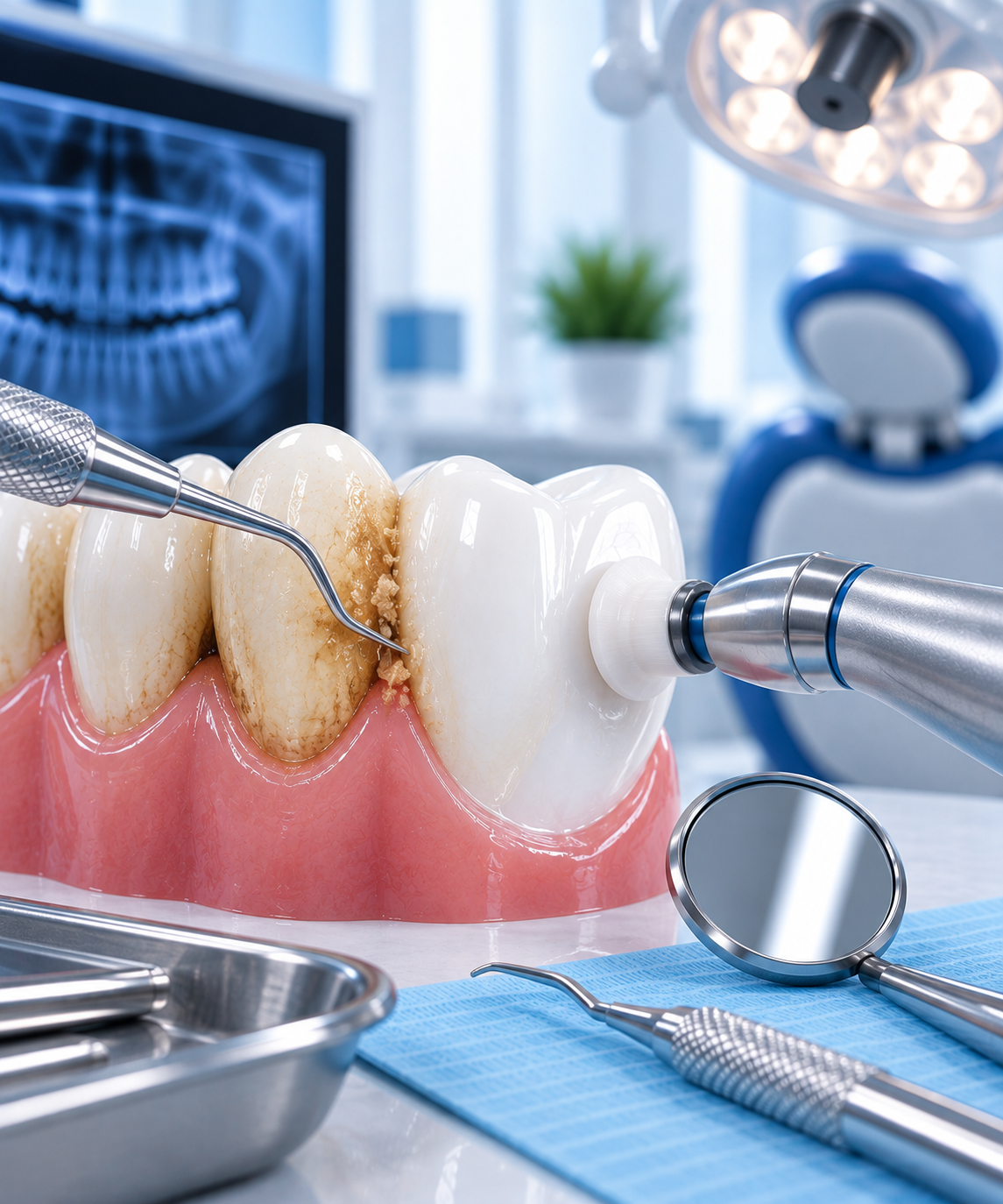
Brushing and cleaning between your teeth are essential daily habits, but hardened deposits can still require professional attention. Scaling and polishing can form part of your dental care plan, with the type of cleaning based on the condition of your teeth and gums.
Plaque and tartar are different
Plaque is a film of bacteria that builds up on teeth. When deposits harden into tartar, brushing alone cannot remove them. A dental professional uses instruments to remove these deposits during scaling. Polishing may then be used as part of the cleaning process.
What happens at the appointment?
Your dental professional assesses your mouth and removes deposits using suitable instruments. Explain any sensitivity or concerns before the cleaning begins. The appointment is also a chance to review how you brush and clean between teeth, especially around areas where deposits collect.
Is routine cleaning the same as deep cleaning?
No. When gum disease creates pockets around teeth, a dentist may recommend scaling and root planing below the gumline. This is a different treatment plan from routine polishing and may require local anaesthetic and several visits. An assessment determines which approach is appropriate.
What should you ask afterwards?
Ask which areas need more attention at home, which cleaning aids suit your mouth, and when you should return. Professional cleaning supports daily care rather than replacing it. If your gums bleed or remain sore, discuss the symptoms with your dentist instead of assuming a polish alone will solve them. Dental Square offers scaling and polishing in Peshawar as part of its dental services.
Explore our Scaling and Polishing services or book an appointment at Dental Square, Liberty Mall, University Road, Peshawar.